Video teratas


Film corpo tourné pour l'Association "Au Cœur du Niger" (http://www.aucoeurduniger.ch) pendant 3 jours dans la ville de Zinder au Niger.
Producteur-journaliste: Jean-Philippe Rapp
Réalisation-image-montage-postprod: Ian Jaquier
Prise de son: Lardia Théophile
Le parfait organisateur: Franck Simond.
© 2012


On the immigration, terrorism and global warming frontlines, one of the world's poorest nations has a multitude of problems piecemeal aid will not solve.…
READ MORE : http://www.euronews.com/2018/1....0/26/niger-grapples-
What are the top stories today? Click to watch: https://www.youtube.com/playli....st?list=PLSyY1udCyYq
euronews: the most watched news channel in Europe
Subscribe! http://www.youtube.com/subscri....ption_center?add_use
euronews is available in 13 languages: https://www.youtube.com/user/e....uronewsnetwork/chann
In English:
Website: http://www.euronews.com/news
Facebook: https://www.facebook.com/euronews
Twitter: http://twitter.com/euronews
Google+: http://google.com/+euronews
VKontakte: http://vk.com/en.euronews


Three Los Angeles residents travel to Niger, a remote and volatile desert region in Southen Sahara, which has been on theUS Department of State "travel warning list" for decades. The 70 minute movie tracks their experiences and realizations in this country, about as far removed from LA as you can think. www.roadtripniger.com
A born to play productions 2016


Hotel Rwanda - The Hutu Arrive: The situation becomes dire when the Hutu deliver the helmet of one of Oliver’s (Nick Nolte) men to the hotel gate.
BUY THE MOVIE: https://www.fandangonow.com/de....tails/movie/hotel-rw
Watch the best Hotel Rwanda scenes & clips:
https://www.youtube.com/playli....st?list=PLZbXA4lyCtq
FILM DESCRIPTION:
Paul Rusesabagina (Don Cheadle), a Hutu, manages the Hôtel des Mille Collines and lives a happy life with his Tutsi wife (Sophie Okonedo) and their three children. But when Hutu military forces initiate a campaign of ethnic cleansing against the Tutsi minority, Paul is compelled to allow refugees to take shelter in his hotel. As the U.N. pulls out, Paul must struggle alone to protect the Tutsi refugees in the face of the escalating violence later known as the Rwandan genocide.
CREDITS:
TM & © MGM (2004)
Cast: Desmond Dube, Don Cheadle, Joaquin Phoenix, Nick Nolte
Director: Terry George
WHO ARE WE?
The MOVIECLIPS channel is the largest collection of licensed movie clips on the web. Here you will find unforgettable moments, scenes and lines from all your favorite films. Made by movie fans, for movie fans.
SUBSCRIBE TO OUR MOVIE CHANNELS:
MOVIECLIPS: http://bit.ly/1u2yaWd
ComingSoon: http://bit.ly/1DVpgtR
Indie & Film Festivals: http://bit.ly/1wbkfYg
Hero Central: http://bit.ly/1AMUZwv
Extras: http://bit.ly/1u431fr
Classic Trailers: http://bit.ly/1u43jDe
Pop-Up Trailers: http://bit.ly/1z7EtZR
Movie News: http://bit.ly/1C3Ncd2
Movie Games: http://bit.ly/1ygDV13
Fandango: http://bit.ly/1Bl79ye
Fandango FrontRunners: http://bit.ly/1CggQfC
HIT US UP:
Facebook: http://on.fb.me/1y8M8ax
Twitter: http://bit.ly/1ghOWmt
Pinterest: http://bit.ly/14wL9De
Tumblr: http://bit.ly/1vUwhH7
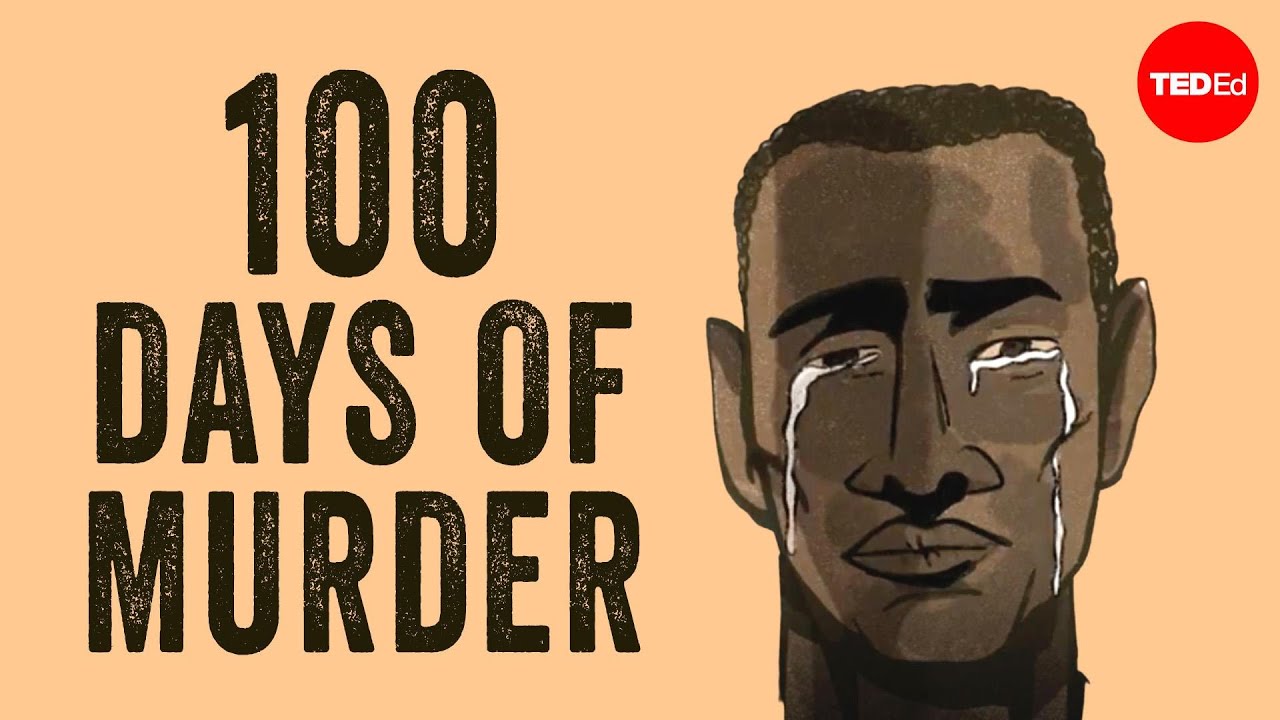
Dig into the history of the Rwandan Genocide of 1994, during which over one-tenth of the country’s population was killed.
--
For one hundred days in 1994, the African country of Rwanda suffered a horrific campaign of mass murder. Neighbor turned against neighbor as violence engulfed the region, resulting in the deaths of over one-tenth of the country’s population. How did this happen? And why didn't international organizations intervene? Susanne Buckley-Zistel digs into the history of the Rwandan Genocide.
Lesson by Susanne Buckley-Zistel, directed by Mohammad Babakoohi.
Support Our Non-Profit Mission
----------------------------------------------
Support us on Patreon: http://bit.ly/TEDEdPatreon
Check out our merch: http://bit.ly/TEDEDShop
----------------------------------------------
Connect With Us
----------------------------------------------
Sign up for our newsletter: http://bit.ly/TEDEdNewsletter
Follow us on Facebook: http://bit.ly/TEDEdFacebook
Find us on Twitter: http://bit.ly/TEDEdTwitter
Peep us on Instagram: http://bit.ly/TEDEdInstagram
----------------------------------------------
Keep Learning
----------------------------------------------
View full lesson: https://ed.ted.com/lessons/wha....t-caused-the-rwandan
Dig deeper with additional resources: https://ed.ted.com/lessons/wha....t-caused-the-rwandan#digdeeper
Animator's website: https://mohammadbabakoohi.tumblr.com
----------------------------------------------
Thank you so much to our patrons for your support! Without you this video would not be possible! Mark Morris, Misaki Sato, EdoKun, SookKwan Loong, Bev Millar, Lex Azevedo, Michael Aquilina, Jason A Saslow, Yansong Li, Cristóbal Moenne, Dawn Jordan, Prasanth Mathialagan, Samuel Doerle, David Rosario, Dominik Kugelmann - they-them, Siamak Hajizadeh, Ryohky Araya, Mayank Kaul, Christophe Dessalles, Heather Slater, Sandra Tersluisen, Zhexi Shan, Bárbara Nazaré, Andrea Feliz, Victor E Karhel, Sydney Evans, Latora, Noel Situ, emily lam, Sid, Niccolò Frassetto, Mana, I'm here because of Knowledge Fight Facebook group., Linda Freedman, Edgardo Cuellar, Jaspar Carmichael-Jack, Michael Burton, VIVIANA A GARCIA BESNE, The Vernon's, Olha Bahatiuk, Jesús Bíquez Talayero, Chels Raknrl, Sai Pranavi Jonnalagadda, Stuart Rice, Jing Chen, Vector-Dopamine math, Jasper Song, Giorgio Bugnatelli, Chardon and Eddy Trochez.